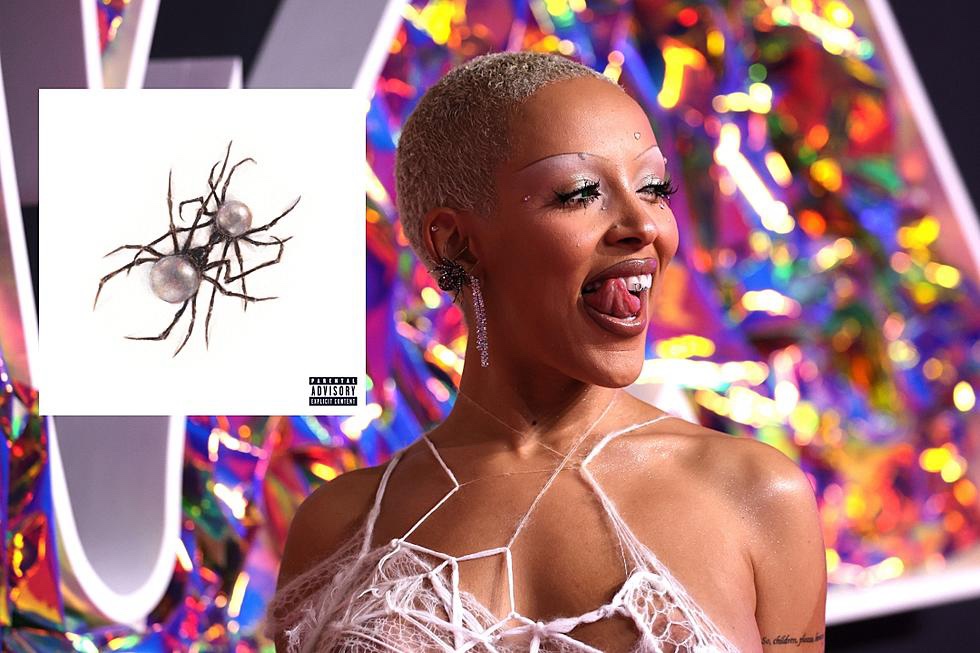
Doja Cat
Scarlet
Release Date: September 22nd, 2023
RCA Records
Doja Cat’s “Scarlet” is a fascinating album that stands at the crossroads of acclaim and critique. In the contemporary age of flourishing female rap artists, where the likes of Nicki Minaj and Cardi B vie for the spotlight and a second wave of stars, including Megan Thee Stallion, Latto, and Ice Spice, have solidified their presence, Doja Cat often finds herself on the outskirts of this conversation. Her versatility, straddling both rapping and singing, has propelled her to stardom with hits like “Say So” and “Kiss Me More,” but her rapping prowess sometimes gets overshadowed by glossy production.
However, with the lead single “Paint the Town Red” from her fourth album, “Scarlet,” Doja Cat shows a different side. This light, airy, and disarmingly casual hip-hop track, complemented by a sample of Dionne Warwick’s “Walk on By,” highlights her slick and dexterous rapping. Amid a hip-hop landscape dominated by contemporary styles, “Scarlet” sets Doja Cat apart by embracing earlier eras, notably the early 1990s and early 2010s. Yet, it’s important to note that her homage to the past is not merely nostalgic or imitative; it’s a form of artistic decoration.
This nostalgic undercurrent runs through the album. “Can’t Wait” samples the iconic drums from the Honey Drippers’ “Impeach the President” while delving into intense romantic affection, and “____ the Girls (FTG)” resonates with a ’90s New York rap vibe. “Ouchies” brings the energy of the late 1980s to the forefront. Doja Cat flexes her rapping technique, evoking the spirits of past eras, as seen in “Love Life,” where she nods to the mid-’90s proto neo-soul of Groove Theory and matches it with a percussive flow reminiscent of Ladybug Mecca from Digable Planets. “Balut,” a muscular, boom-bap track with swaggering punchlines, feels like it could have featured on Rawkus’s “Soundbombing” series.
Lyrically, “Scarlet” revolves around two primary themes: Doja Cat’s dominance and her lust. She’s not one to tell extended stories but rather a rapper who revels in revisiting a rhyme from different angles, making her verses almost tantric in their repetition. She touches on conflicts with fans and peers, offering witty insights into her experiences. When it comes to songs about sex, like “Agora Hills” and “Often,” they are bawdy and lighthearted, adding a playful touch to the album.
“Scarlet” is admittedly uneven, especially when compared to Doja Cat’s previous works, but it’s also her most promising and encouraging album to date. In a world with numerous templates for women in hip-hop, she refuses to conform to any of them. Her unique path through the genre sets her apart from contemporary peers, and it’s conceivable that her absence from the current hip-hop conversation is a deliberate choice.
However, not everyone sees “Scarlet” in the same light. Some view it as a responsive and somewhat repetitive album. It’s perceived as Doja Cat’s reaction to critics who have doubted her rap skills. The album leans towards traditionalist hip-hop themes and responds to past controversies and insults, potentially at the cost of artistic exploration. It occupies a conceptual space somewhere between Rico Nasty’s “Anger Management” and Taylor Swift’s “Reputation,” resulting in a focused but at times contentious collection of songs.
Doja Cat’s resolve to silence the naysayers is evident, and her relatively straightforward approach to hip-hop often reflects ’90s boom-bap sensibilities updated with contemporary elements. The involvement of collaborators like Lil Yachty’s frequent collaborator Earl on the Beat and Jay Versace adds diversity to the album’s sonic landscape.
Despite Doja Cat’s dynamic vocal performance and occasional flashes of brilliance, the writing on “Scarlet” has drawn criticism. Some have found her lyrics reactive and her delivery akin to a sore winner resorting to playground taunts. It’s a saga that plays out across several tracks, occasionally focusing on controversies and feuds. As a result, the album leaves some listeners perplexed, wondering who its intended audience is.
The desire for the album to be more fun and embrace the playful spirit of horrorcore is evident. While “Paint the Town Red” and certain moments in the album harken back to the days of Slim Shady-era Eminem, there’s a longing for more of that eerie, enjoyable factor. Perhaps a collaboration with other internet-savvy rappers, like Rico or JPEGMAFIA, could have injected more madness into “Scarlet.”
Doja Cat’s “Scarlet” album is a polarizing journey, with some celebrating its inventive nostalgia, her unique take on hip-hop, and her refusal to conform, while others find it somewhat reactive and repetitive, overshadowed by past criticisms. It’s an album that elicits contrasting opinions and demonstrates the complexities of navigating the ever-evolving landscape of rap music.




 House of Music
Leave a comment